
An Unbroken Lineage · A Clear Source
ཨོཾ་ཨཱཿཧཱུྃ་བཛྲ་གུ་རུ་པདྨ་སིདྡྷི་ཧཱུྃ
This Dharma community belongs to the Ancient Translation Nyingma Palyul lineage and upholds Dzogchen, the summit of the nine vehicles: the ultimate path that points directly to the mind's nature, primordially pure and complete in this very moment.
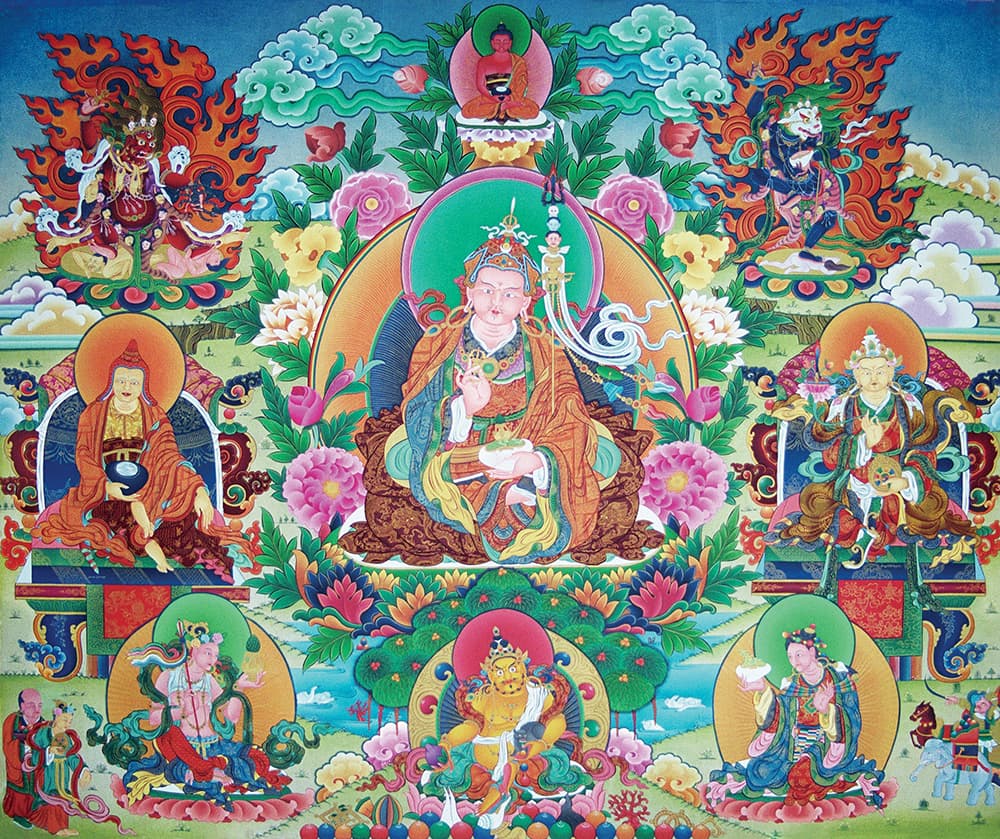
The Dharma took root in the Land of Snows through the aspiration of the three sublime ones: Khenpo Shantarakshita, who established the foundation of monastic discipline; Guru Padmasambhava, who subdued obstacles through the secret mantra and revealed the Vajrayana; and Dharma King Trisong Detsen, who invited the masters, offered royal patronage, and built the temple. Together at Samye Monastery, they accomplished the work of translating the scriptures and transmitting the Dharma. From there the Nyingma transmission flowed in two great streams: the oral transmission (kama), passed directly from master to disciple, and the treasure transmission (terma), concealed by Guru Rinpoche for future generations and revealed when the time was ripe. The Longchen Nyingtik and the Namchö Sky Dharma upheld here both belong to this treasure lineage: heart-essence teachings left by the masters for those who would come later.
- Dharmakāya · PrimordialDzogchen Lineage · Dharmakāya Primordial Buddha
 Dharmakāya · Primordial · Dzogchen Lineage · Dharmakāya Primordial Buddha
Samantabhadra (Kuntuzangpo)
SAMANTABHADRA · 本初佛
The primordial source of the Dzogchen transmission and the dharmakāya primordial buddha. Through the Mind-Direct Transmission of the Victorious Ones, he conveys self-arisen wisdom directly to the saṃbhogakāya buddhas and stands as the root of Dzogchen's three transmissions. (This is the Nyingma dharmakāya primordial buddha, distinct from the bodhisattva Samantabhadra of the sūtra tradition.)
Read more → - SambhogakayaDzogchen Lineage · Sambhogakaya Buddha
 Sambhogakaya · Dzogchen Lineage · Sambhogakaya Buddha
Vajrasattva
VAJRASATTVA · 報身
Lord of all buddha families, manifesting in the sambhogakaya dimension. Through the symbolic transmission of the vidyadharas, he conveyed the Dzogchen teachings to Garab Dorje, the first human master, opening the bridge by which the dharmakaya's wisdom intent entered the human realm.
Read more → - circa 1st century CEFirst Human Master of Dzogchen
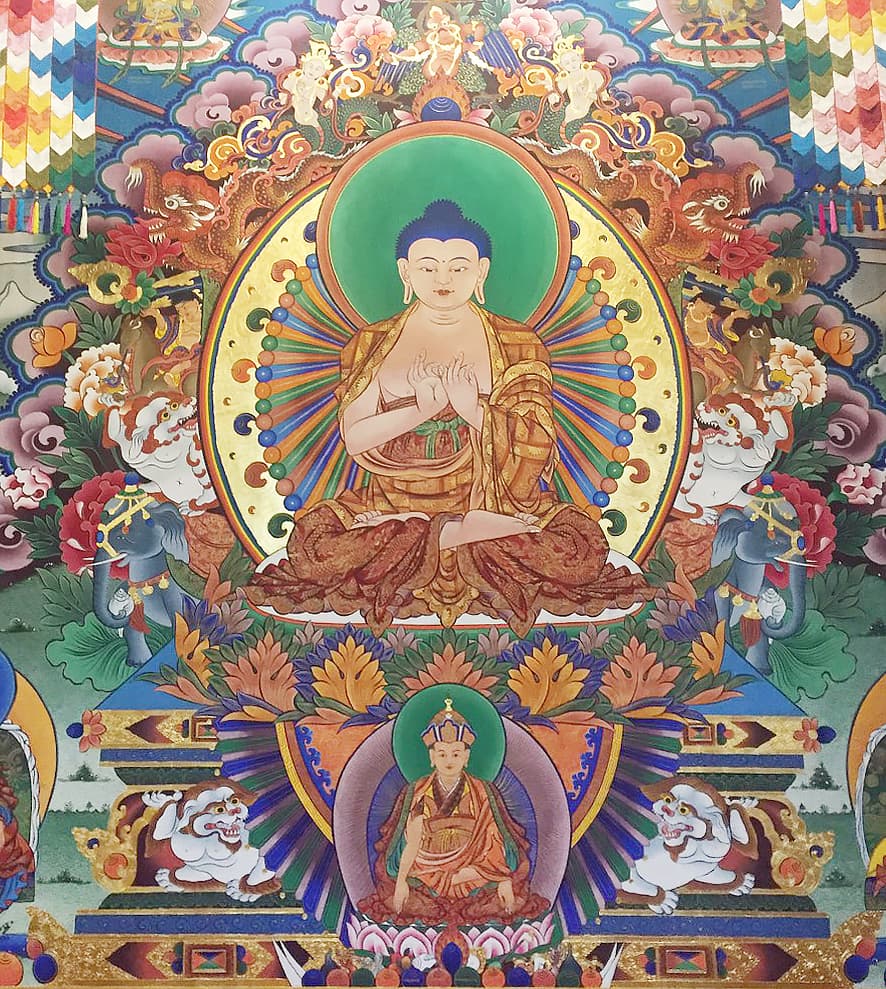 circa 1st century CE · First Human Master of Dzogchen
Garab Dorje
GARAB DORJE · 噶繞多傑
The first human master of the Dzogchen transmission, born in Oddiyana. He received the complete Dzogchen teachings from Vajrasattva and, at his parinirvana, entrusted Mañjuśrīmitra with the "Three Statements That Strike the Vital Point," which became the root of the Dzogchen heart-essence for all later generations.
Read more → - circa 8th centuryDzogchen Vidyādhara Patriarch
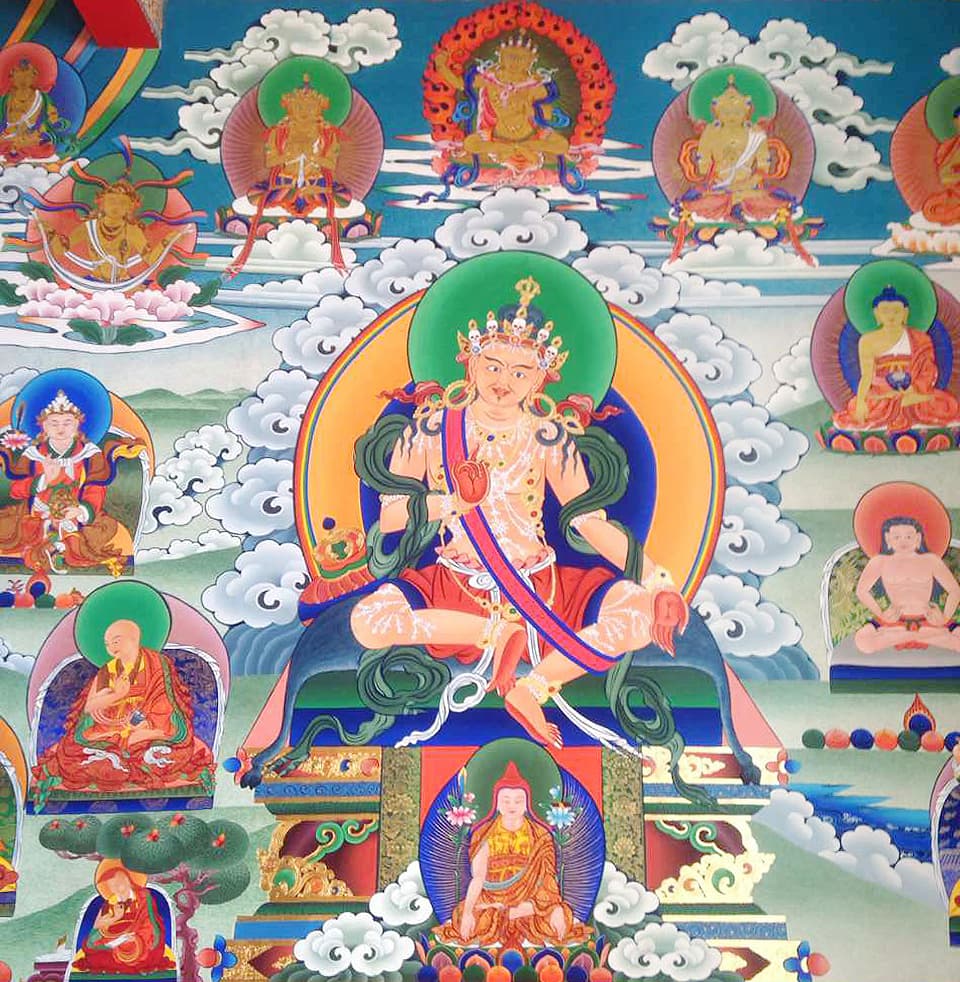 circa 8th century · Dzogchen Vidyādhara Patriarch
Shri Singha
SHRI SINGHA
The great compiler of the Dzogchen Pith Instruction Class (Mengakdé). After relying on Mañjuśrīmitra for twenty-five years, he organized the heart-essence teachings into four cycles and transmitted the Dharma to Padmasambhava, Vimalamitra, and other masters who carried it into Tibet.
Read more → - Eighth centuryRoot Forefather of the Old-Translation Nyingma SchoolEighth century · Root Forefather of the Old-Translation Nyingma School
Guru Padmasambhava
GURU PADMASAMBHAVA
Root forefather of the Old-Translation Nyingma school, revered throughout Tibet as Guru Rinpoche, the Precious Master. Together with Khenpo Śāntarakṣita and Dharma King Trisong Detsen, he established the Dharma in the Land of Snows; for the benefit of future generations, he concealed a vast body of profound teachings as treasures (terma). Both teaching systems transmitted at this centre arise from this compassionate skilful means.
Read more → - 1308–1364The Omniscient Dharma King · venerated by later generations as "the Second Buddha"
 1308–1364 · The Omniscient Dharma King · venerated by later generations as "the Second Buddha"
Longchenpa
LONGCHENPA · 遍知法王
Learned in all the sutras, tantras, and five sciences, he brought the Dzogchen heart-essence (Nyingtik) to its fullest expression. He composed the Seven Treasuries, the Three Cycles of Rest (Ngalso Korsum), the Three Cycles of Natural Liberation (Rangdrol Korsum), and other monumental works, establishing a profound and far-reaching presentation of Dzogchen. Later generations venerate him as "the Second Buddha," and the very name Longchen Nyingtik is drawn from him.
Read more → - 1730–1798Treasure-Revealer of the Longchen Nyingtik
 1730–1798 · Treasure-Revealer of the Longchen Nyingtik
Venerable Jigme Lingpa
JIGME LINGPA · 智悲光
The treasure-revealer of the Longchen Nyingtik. During long retreat at Samye Chimphu, he encountered Longchenpa three times in pure, luminous vision, receiving the blessing of his enlightened mind and the transmission of the heart-essence meaning. Through a mind treasure he revealed the complete Longchen Nyingtik cycle, which then spread widely.
Read more → - 1765–1843Lineage Master of the Longchen Nyingtik Transmission
 1765–1843 · Lineage Master of the Longchen Nyingtik Transmission
Jigme Gyalwe Nyugu
JIGME GYALWE NYUGU
A heart-son of Jigme Lingpa, he spent long years in mountain retreat and later transmitted the Longchen Nyingtik preliminaries twenty-five times to Patrul Rinpoche, becoming the living source behind The Words of My Perfect Teacher.
Read more → - 1808–1887Dzogchen Master · Author of The Words of My Perfect Teacher
 1808–1887 · Dzogchen Master · Author of The Words of My Perfect Teacher
Patrul Rinpoche
PATRUL RINPOCHE · 華智
The most renowned Nyingma master of the nineteenth century. He received the Longchen Nyingtik preliminaries from Jigme Gyalwe Nyugu, composed The Words of My Perfect Teacher, and transmitted the heart-essence of Dzogchen to disciples such as Lungtok Tenpe Nyima.
Read more → - 1879–1941Modern Master of Dzogchen Exegesis
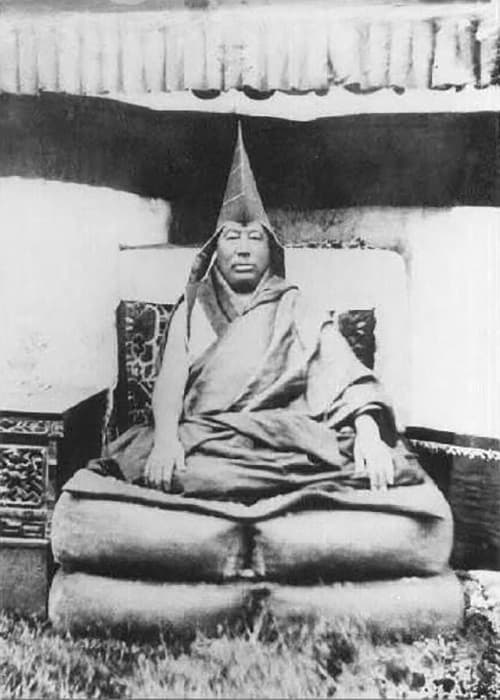 1879–1941 · Modern Master of Dzogchen Exegesis
Khenpo Ngakchung
KHENPO NGAWANG PALZANG
One of the most important Dzogchen exegetes of the Nyingma school in the twentieth century. At Kathok Monastery he propagated the Longchen Nyingtik, composed a vast body of writings, and took part in recognizing the Third Penor Rinpoche. He is revered as an emanation of Vimalamitra and Longchenpa.
Read more → - 1932–2009Third Supreme Head of the Nyingma School · Eleventh Throneholder of Palyul
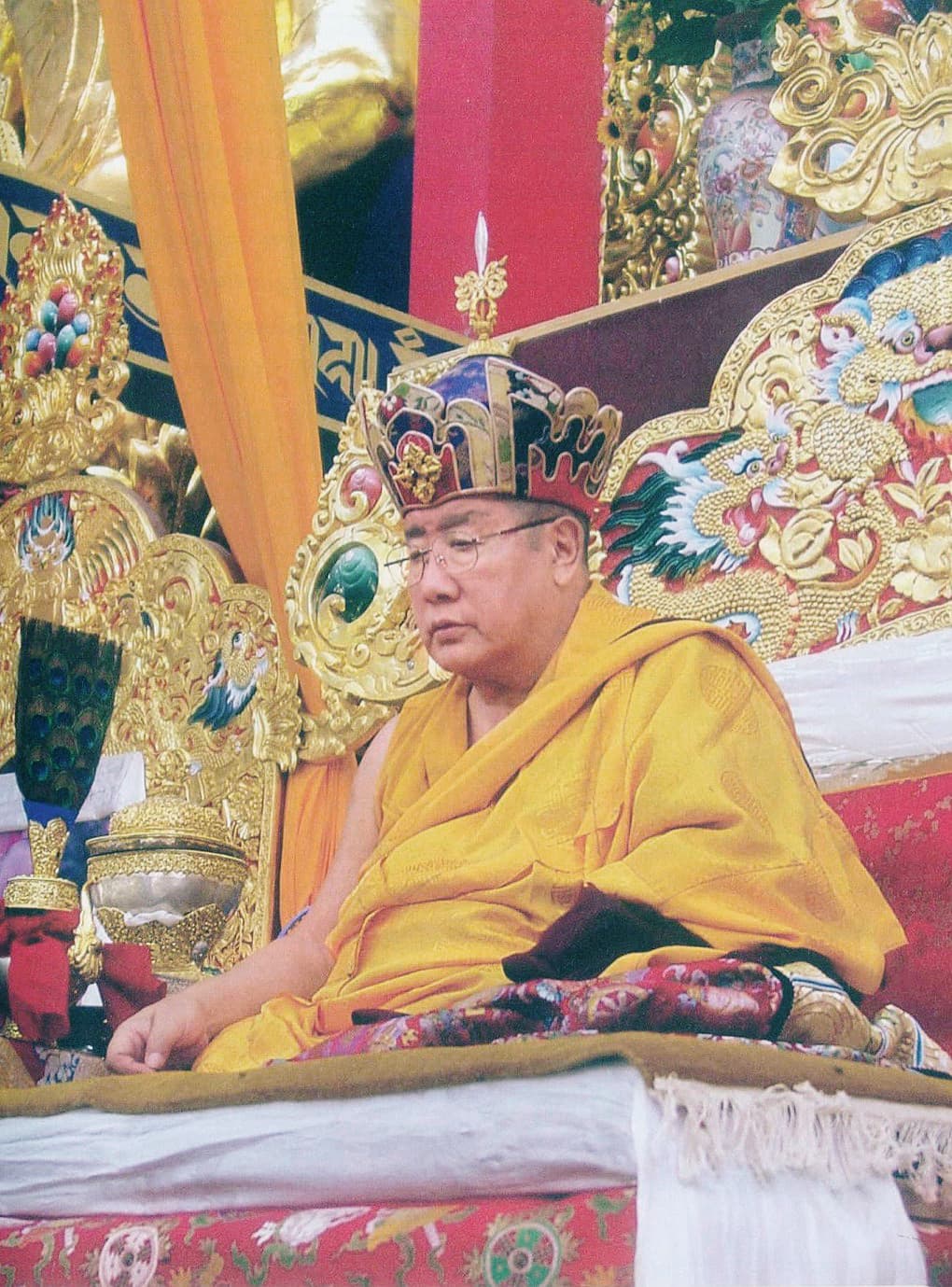 1932–2009 · Third Supreme Head of the Nyingma School · Eleventh Throneholder of Palyul
Penor Rinpoche III
PENOR RINPOCHE III
The root guru of Khenpo Nima Rinpoche, universally acknowledged as an emanation of Vimalamitra, who in 1993 was enthroned as the Third Supreme Head of the Nyingma School. In 1963, with meager resources, he rebuilt the Palyul lineage in South India and founded Namdroling Monastery, developing it into one of the largest Nyingma monasteries of the present age.
Read more → - Present DayRoot Lineage Master of the Association
 Present Day · Root Lineage Master of the Association
Khenpo Nima Rinpoche
KHENPO NIMA RINPOCHE
Holding the transmission conferred by His Holiness Penor Rinpoche, he teaches Dzogchen Longchen Nyingtik and the Namchö Sky Dharma in Hong Kong, guiding practitioners through the preliminaries and the graduated path of Dzogchen. His life and deeds are recounted below.
The Khenpo's life →
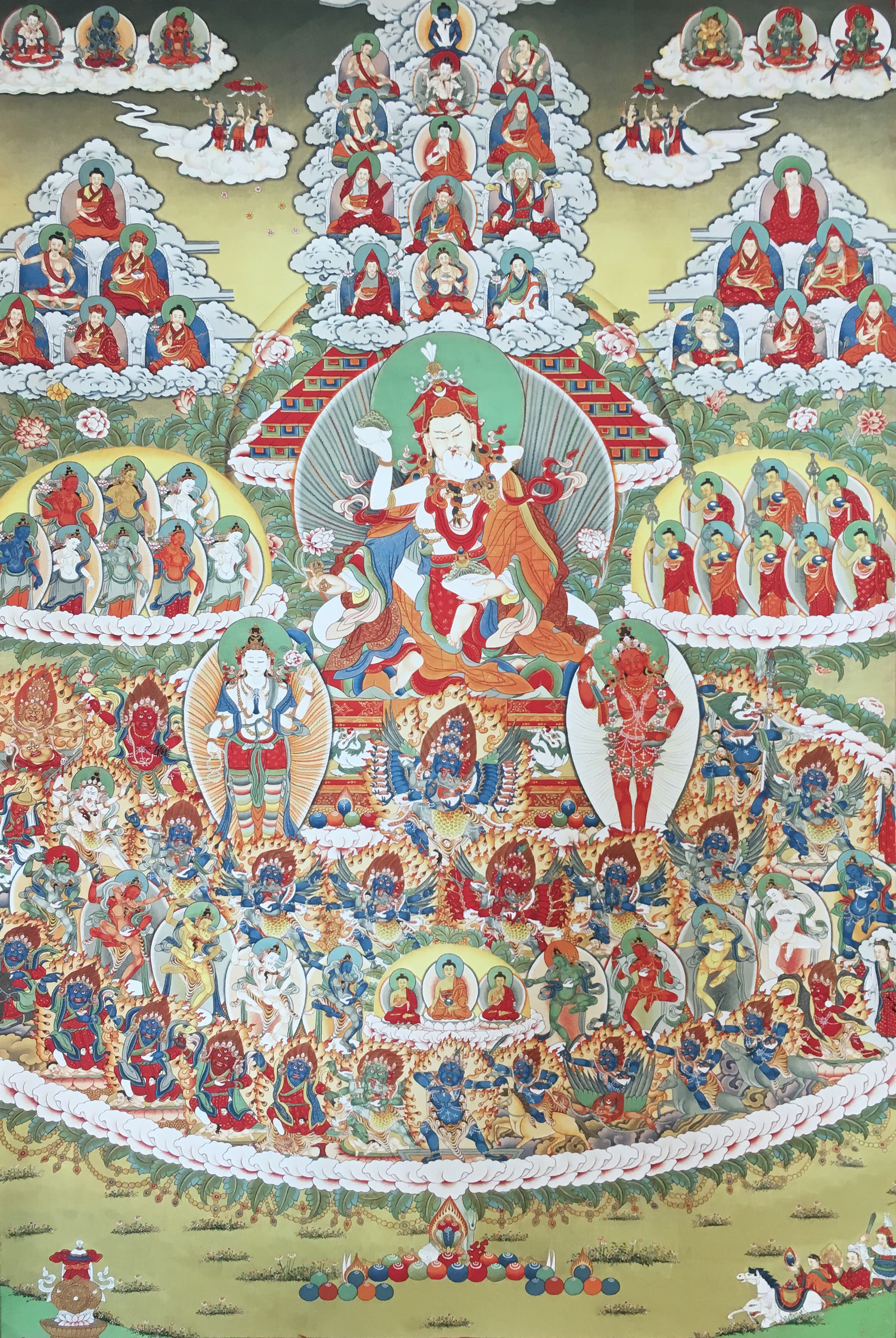
LONGCHEN NYINGTHIG · 心髓
Great Perfection Longchen Nyingtik
"Nyingtik" means "heart essence": the most direct and essential current within the Great Perfection teachings, pointing straight to the original face of mind. Its origins trace back to the master Vimalamitra; it was brought to full expression by Longchenpa, and in the eighteenth century Jigme Lingpa revealed the complete cycle as a mind treasure. It is the foundation of this centre's path of study and practice, proceeding step by step from the common outer preliminaries through the uncommon inner preliminaries to the main practice of the Great Perfection, always under a master's personal guidance.
Learn more →NAMCHÖ · 虛空法
Great Perfection Namchö Sky Dharma
"Namchö" means "Sky Dharma," a name given because these teachings arose spontaneously, as if from the open sky. It is a treasure (terma) revealed by the great seventeenth-century tertön Mingyur Dorje; his oral teachings were recorded and compiled by the great siddha Karma Chagmé Rinpoche into more than ten volumes still transmitted today. Renowned for its complete liturgies and swift blessings, the Namchö Sky Dharma forms, together with Longchen Nyingtik, one of the two heart-essence Dharma systems treasured by the Palyul lineage.
Learn more →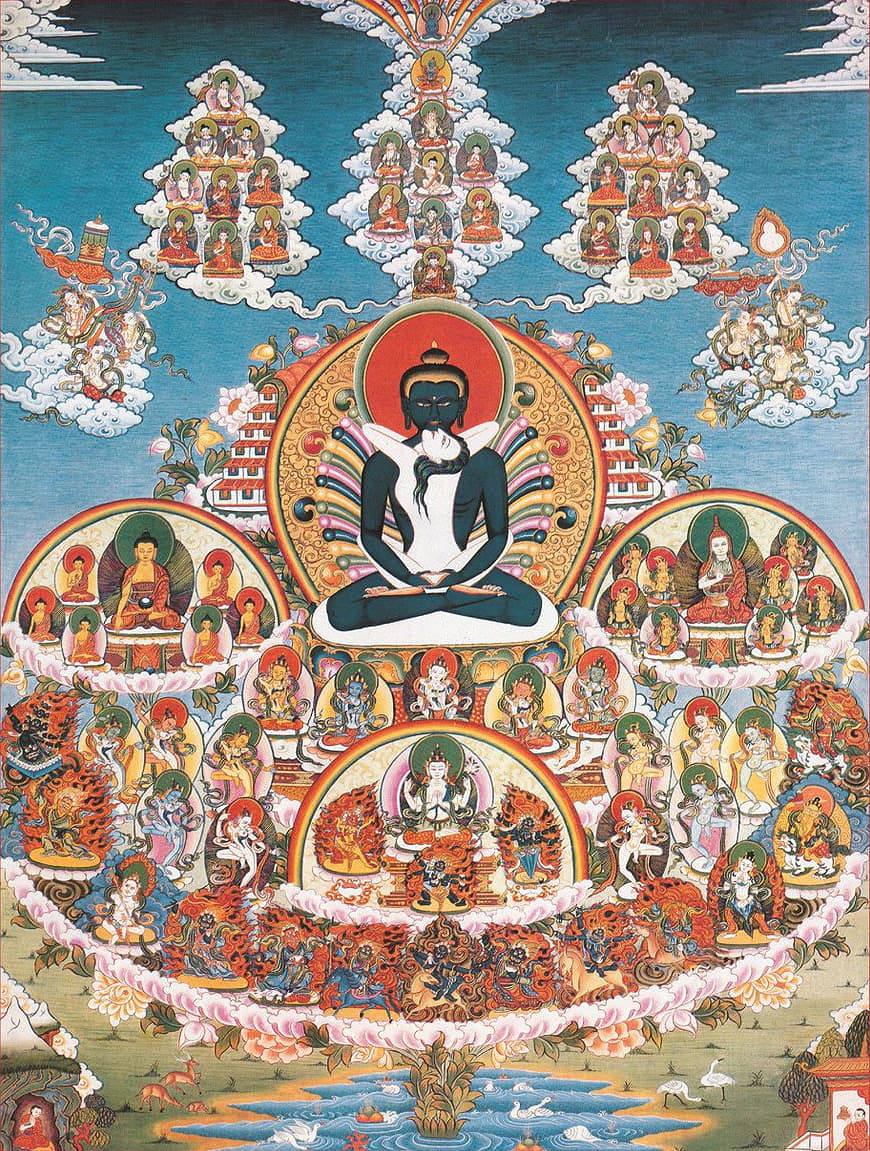
The Palyul lineage is one of the six great mother lineages of the Nyingma tradition. It is renowned for preserving the two heart-essence cycles, Dzogchen Longchen Nyingtik and the Namchö Sky Dharma, and for giving equal weight to study, reflection, and practice. Its root seat, Palyul Monastery, was founded in eastern Tibet and has been carried forward for centuries. After 1959, His Holiness the Third Penor Rinpoche left Tibet and, in 1963 near Mysore in South India, began again with only the simplest resources and a small group of monks, rebuilding the Palyul lineage and founding Namdroling Monastery. Over half a century, Namdroling grew into one of the largest Nyingma monasteries of our time, with more than three thousand monks and nuns, a monastic college, and a retreat centre. It became the central mother monastery through which the Palyul lineage continues abroad and trains new generations of monastics. The khenpos who serve the association come from the Namdroling tradition, authenticated by successive throne holders and the lineage of Penor Rinpoche. The Dharma they transmit is an unbroken stream with a clear source.
Khenpo Nima Rinpoche
KHENPO NIMA RINPOCHE
「To bring the Dharma into every dark corner of the world, so that all places in shadow may shine with light.」
- 1956
Born in Menthang, Bhutan. He took ordination in Bhutan in 1965 and received monastic education from an early age, laying the foundation for a lifetime of study, contemplation, and meditation.
- 1968
He studied thangka painting under Lopön Tsering Dorje of Lhalung, over a span of several years, completing his training in 1973—a mastery of sacred imagery that would later be evident in his attention to the adornment of monasteries and to ritual implements and liturgy.
- 1983
He travelled to the Ngagyur Nyingma Institute in Mysore, South India, for advanced study. He subsequently held such posts as reviewing teacher and khenpo, teaching for many years at both Namdroling Monastery and Tharpaling Monastery, expounding the sūtra and tantra treatises.
- 1997
By the appointment of the Bhutanese government and Penor Rinpoche, he was installed as the sixth abbot of Tharpaling Monastery. During his tenure he reformed the education of the monastic community, built roads and stūpas, and travelled tirelessly to raise funds and perform ceremonies.
- 1999
Having perfected the threefold wisdom of study, contemplation, and meditation in both sūtra and tantra, he was recognized by the Third Penor Rinpoche as a qualified Khenpo Rinpoche.
- 2016
The restoration of Tharpaling Monastery in Bhutan was completed, and the Longchenpa Hall, the Green Tārā Hall, and the Śākyamuni Buddha Hall were consecrated. His aspiration likewise forms the basis of the association's mission.